home

    Scope buyers guide 'The Technical Perspective'


    This article aims to assist you in selecting a scope for diagnostic purposes by explaining how a digital scope works.


    Page 1/3


    Digital Dual channel scope (AVL DISCOPE 200)


    In this AECS document I'll try to set out where to watch for when buying a scope, from the technical perspective.

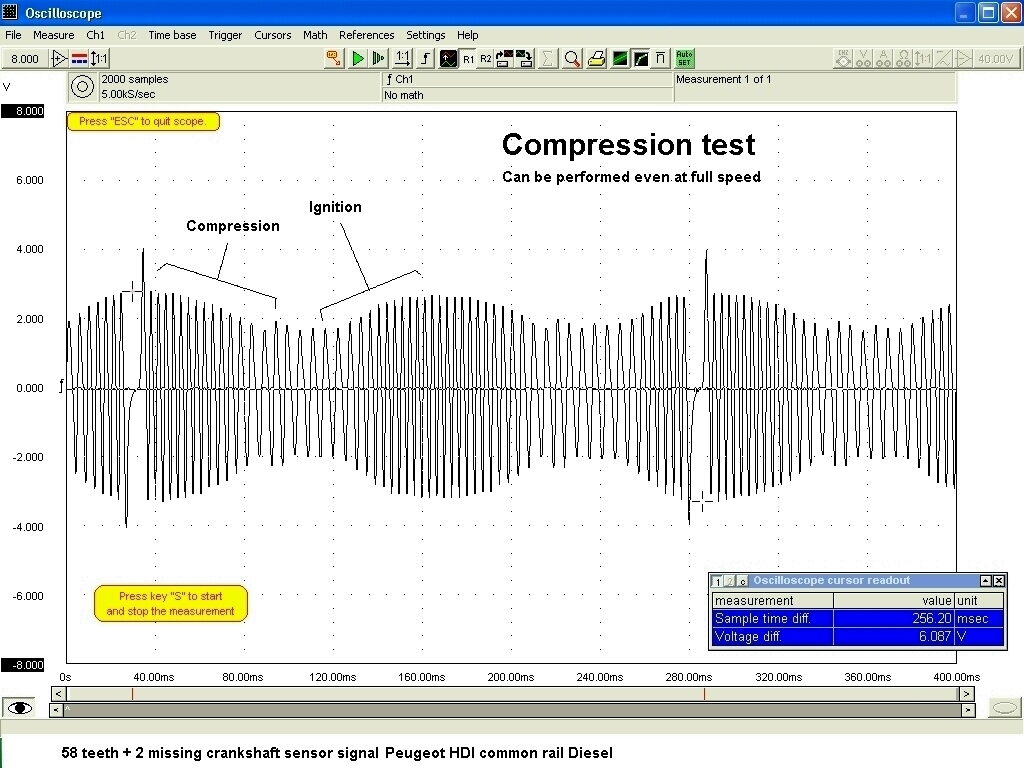
    Scope pattern recorded with the ATS 801 or the AVL DISCOPE 200. The signal is a crankshaft sensor signal of a Peugeot HDI common rail diesel while starting.

    In the pattern a clear and exact measurement of the engine's individual cylinders dynamic compression (energy consumption under compression) and energy production while combusting can be seen. The scope needs to be fast and accurate in order to record the amplitude (height of the sine wave) properly . It is not allowed to 'fall' into its own frequency and should not leave detail out. Nor should it measure and display averages between the measurements.

    For diagnostics you want to see exactly what is happening, not what the scope software makes out of it; to paste over imperfections!

    I will try to explain how a digital scope works in a simple way so you can safely select the correct tool, remember the purchase price is NOT indicative for the quality and effectiveness of the scope!!

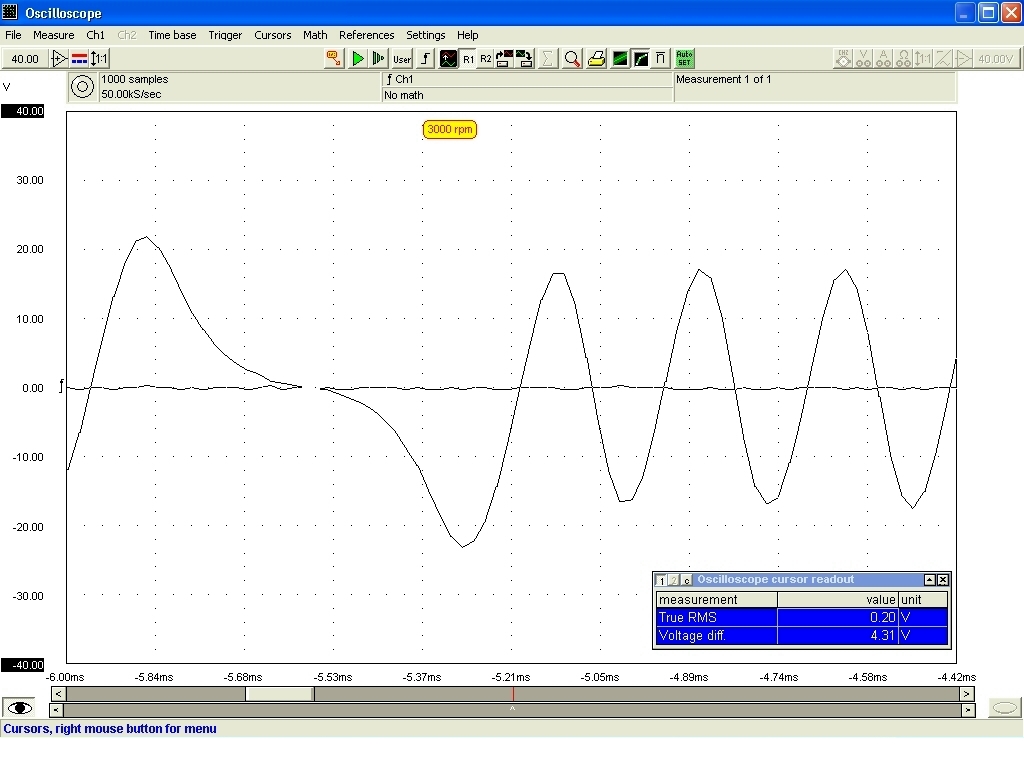
    I will concentrate on a section of the above crank angle sensor signal:

    1) Section of the crankshaft sensor signal at 3000 RPM, the missing teeth and 3 whole teeth are visible. The scope is set to a 50 kilo(000) Samples per second speed (50kS/sec).

    This setting (on the ATS 801 scope) can be selected by clicking on component colour pictures menu's and needs no further adjustments from the user.

    Scope technology..


    Continued..

    Continued..


    Back to 'tech. help'


    to equip. catalogue


    Back to 'Welcome'